Camille Pilar is a surfer and writer in Lingayen, Philippines. She loves to explore new waves and surf trip adventures with her friends.
Browsing All Posts By Camille Pilar

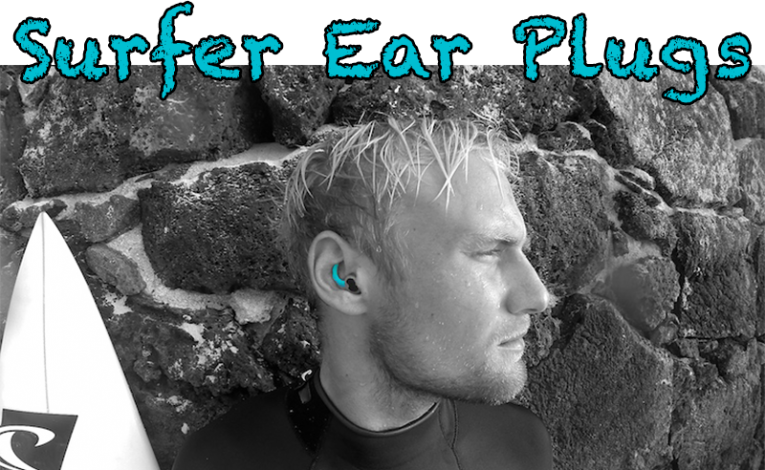
The 4 Best Surfing Ear Plugs

Ear Plugs for Surfers

Some types of insurances are overrated.

However, when you’re choosing water sport gear primarily for insurance purposes, say a leash for your paddle or a helmet for that shallow-reef break, you need to add one more thing to your list. That is, if you haven’t already. Earplugs.

Continue Reading
READ MORE +

History of the Hybrid Surfboard

History of the Hybrid Surfboard

Hybrids are a difficult to trace back to a specific period in time, as they aren’t a specific type of surfboard.

Technically, every board out there that doesn’t have a “traditional” setup is a hybrid board. So every board is a hybrid board then right? Sort of, though let’s try and trace it back.

Modern hybrids as we understand them today, are mixtures between shortboards and fish surfboards.

Shortboards came around in the 1960s and fish surfboards became popular in the late 1960s and early 1970s.

The reason that they became popular was that shapers had access to better shaping technology, materials, resources, etc.

With that knowledge, we can figure that hybrid surfboards were only becoming a thing as the 1970s rolled around.

Essentially, it’s nearly impossible to pin down who made the first hybrid board, as there was never an exclamation or date of creation, more or less a snowball effect of board shaping experimentation.


How Did These Boards Become So Popular?

The modern “hybrid” didn’t really become popular until the early 2000s after the second shortboard revolution in the 1990s. That theory comes from the fact that shortboards in the 1990s had far more rocker and were much narrower. Shapers began widening the bodies and flattening the boards in 2000s and pros began adapting to riding them.

They became so popular because they were functional for everyday surfing. Like fish surfboards, they were easier to paddle, had more stability, and could be surfed in low-level conditions. Like a shortboard, they were maneuverable and could be used in competitive surfing. They gave surfers of all levels the best of both worlds.


So What Exactly Is a Hybrid Surfboard?

Hybrid surfboards can feature a variety of characteristics from one board to the next, though there are some things that stay true in the general build. Hybrid boards tend to have much lower rocker and wider outlines. They are thicker throughout and have tons of room under the chest that makes popping up and standing much easier.

The tails are typically pulled in just a bit as well. The best way to differentiate them is the outline.

They’re a little “stubbier” than a shortboard, but still has a slimmer design than a fish.

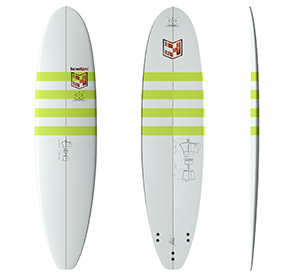
Hybrid Surfboard top view


Why Did Hybrid Surfboards Catch On?

One word: Functionality. You’ll find that most serious shapers have at least one hybrid surfboard in their lineup. We would even dare to say that they’ve begun to catch on more than shortboards. This is because hybrids are high-performance boards for the everyday surfer. Most surfers aren’t pro and don’t live in places where the waves are amazing every single day. If you’re reading this, then that is most likely your case. Hybrid Surfboards were made to provide these average 9-5 day job or full-time school surfers with a way to get out in any kinds of conditions and surf with the most versatility.


Why Should I add a Hybrid Surfboard to my Quiver?

There are literally a hundred reasons why everyone should have a hybrid surfboard. Honestly, if you could only have one board, we’d recommend a hybrid.

For starters, the flat rocker on these boards with the complementary width, allows you to catch waves much easier and ride them for longer, even on subpar days. Mushy waves require a bit more balance to catch longer lines and the hybrid can definitely provide that.

Second, the fact that a hybrid is still short gives you the ability to maneuver and turn tight in pockets that would be next to impossible with a longboard.

Lastly, if you’re a bigger guy or gal, a hybrid surfboard can give you a little more beef to ride on than a shortboard, which you might find difficult to find the balance sweet spot on.


Frequently Asked Questions

Is it possible to ride hybrid surfboards in bigger conditions?

Absolutely! We wouldn’t recommend them in vertical surf however, as the low rocker makes it more difficult to stick deeper drops off of the top of a steep wave. In any case, it depends on the hybrid. If you’re looking to surf bigger waves, there are hybrid designs you can look for to help with that. For example, a convex vee nose can shift the water around you and give you a pocket to rest in.


Final Thoughts

Hybrid surfboards are the future of surfing no doubt. They have a shorter history compared to most boards because they are still somewhat of a burgeoning concept that has only take form in the past few decades. Surfers are realizing that they can make the most out of their time in the water with hybrid surfboards, and what’s more important than enjoying every minute of your time surfing? We can’t wait to see what the future holds for this new fleet of boards!


READ MORE +

The History Of the Mini Mal

History Of the Mini Mal

The Mini-Mal surfboard (shortened from Mini Malibu), comes from the Malibu surfboards that were very popular throughout the city in California during the 1960s.

The original Malibu boards were a lot like longboards, though a bit narrower with pulled in noses and tail sections that made them more maneuverable.

They were made this way to surf Malibu’s famous right hand breaks.

One of the first ever Malibu boards is held at the Smithsonian, and is called “Velzy”, named after its creator, Dale Velzy.

The board is made of Balsa wood with a fiberglass surface and a single 10-inch fin. Some called it the “Chip” because of its shape and design.

Because it was so light and easy to carry, many girl surfers began using it.

In California, the “Chip” really propelled surfing boom in the 1960s, as the sport turned into more of a gender neutral thing.

These boards made it possible to perform famous maneuver like “Hang Tens” and “Soul Arches”.

The issue with Malibu Boards is that they were too big for some women, children, and smaller men.

To fix that problem, Malibu manufacturers began shortening their ratios to create what we now know as the Mini-Mal.


How Did These Boards Become So Popular?

While surfing was introduced to Australians in 1915, the idea of modern surfing didn’t arrive to the isolated country until the mid-1950s. A group of Californian surfers arrived with their Malibu boards and began shredding the Australian waters. Aussie surfers had never seen anyone maneuver on a surfboard that way and needed to be in on the action.

It was then that some local Aussie surfers purchased the boards from the touring Californians, and began to analyze them closely. Many tried to mimic the design of the boards. The biggest issue was that these Malibu boards were made from balsa wood, a wood that was not very present in Australia. With a tweak in design and a new foundation of plywood, Malibu boards soon went into mass production and were then apart of two of the biggest surfing destinations in the world.


So What Is a Mini-Mal Exactly?

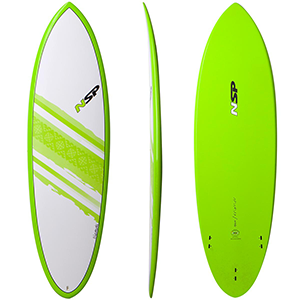
Mini-Mals are essentially a combination of longboards and shortboards and are made to incorporate the best of both worlds. With lengths between 7’ and 8’6”, wide noses, tons of volume, and shortboard setups, these boards were meant for beginners who hadn’t quite moved up to the Malibu ranks, or those who couldn’t handle the large size of a traditional Malibu.

Example of Min Mal


Why did the Mini-Mal catch on?

For starters, Mini Mals were perfect for beginners. They’re easy to paddle, easy to catch waves on, and provide the same stability as a longboard without the issue of size. If you’re just beyond beginner, and have maybe started off on a longboard, these are excellent boards to transition to shortboards on.

Secondly, they are very versatile boards. Even experienced surfers can have tons of fun on these boards just like the Malibu surfers of back in the day had. Because of the reduced size, you can get a lot more control and maneuverability on bigger days.

Lastly, they’re much lighter and easier to transport than longboards or Malibus. If you couldn’t haul those logs around, or didn’t have the proper vehicle to transport them to the beach, you were pretty much out of luck. Think of beaches like Trestles where you have to walk a few miles just get to the shoreline. Mini-Mals made that transportation much more practical.


Why Should I Add a Mini-Mal to My Quiver?

Mini-Mals are excellent boards for small days. For days that make it near impossible to take shortboards out, Mini-Mals can come in handy. Many of us aren’t fortunate enough to have swells almost every day of the week. If you’re one of those many, get a Mini-Mal and have some fun.


Final Thoughts

Mini-Mals can now be found all around the world and are probably the most popular in surf training camps. If you’re just getting into the world of surfing and are planning on taking lessons, there’s no doubt that you’ll end up on one of these eventually, most likely one that’s a soft-top.

We hope you enjoyed our brief history of Mini-Mals and feel free to check out our other board history articles!



READ MORE +

The 7 Best Beginner Surfboards

Top 7 Best Beginner Surfboard Reviews

So you’re finally getting the hang of catching your own wave. It means you are leveling up and that you survived one of the most challenging parts of surfing. At this stage, you’re probably already thinking of buying your own board.

Having your own board will make it simpler for you to improve your skills because you are training your body with just one board instead of several rentals. In the long run, the amount you spend on rentals will cost more than buying a brand new board. Continue Reading

READ MORE +

662 Bodyboard Shop Review

662 Bodyboard Shop Review

Getting set up with the right gear is crucial to bodyboarding. You can go bodyboarding for many years with very little progress if you don’t have the right bodyboard, swim fins, and other accessories.

662 Bodyboard Shop is an all around bodyboarding shop that will get you fitted with the right gear and the best accessories available in the market. This shop is owned and operated by professional bodyboarders, and they have worked hard to become the leader in providing high quality bodyboarding products since 2004. If you need to get set up with the right board, swim fins, leash and other accessories, 662 Bodyboard Shop is the only place to go.

Continue Reading
READ MORE +