One of the most exciting yet challenging things about surfing, is understanding how to use the natural events around you to read the wave conditions.
Unlike other sports, our ‘arena’ is in a constant state of motion, changing one day to the next.
The funny thing is, is even though we have an array of information at our fingertips, many still don’t understand how to read a surf report.
One day you can be surfing a knee high little break that is a couple hundred feet away from your local shoreline when it was dead the day before.
Why though? How can something like this change so drastically within the span of a just a day or even a few hours? Knowing how to read and understand these changes will make it so you’ll never have a friend bragging to you about the “gnarly swell you missed brah”.
There are so many factors that go into a wave’s creation that many people subconsciously decide it is too complicated for them to understand.
From the wind to the tide to the sand breaks and beyond, the impacts of the factors at play are huge.
Luckily, we have a way to condense this information into a chart so that you don’t have to miss any more sweet breaks.
The question now is, “How does one read a surf chat?”
Reading Swell Charts
So you’re suited up and ready to ride. All you’re waiting for now is the proper swell. Unfortunately, you only have a few hours before you need to head out to work, so you can either head out and hope for the best or take a look at a surf chart.
Thanks to the 21st century surfing Jesus, we have modern charts that utilize swell information, both the swell period / height and the swell direction.
Swell Period / Height
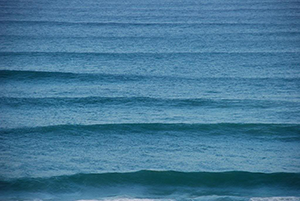
So you’re first question that you’ll ask before you hit the beach will most likely be, “How big are the waves today?” That information is available in numbers that represent the height of the wave and the swell period. The swell period is defined as the amount of time a wave takes before it passes a specific marked point. Swell periods that are on the long side will have waves that are faster and stronger.
As an example, a surf report might say something like 3ft 14 seconds. This mans that the waves are 3ft tall (a measly size for most serious surfers), though that 14-second period will make them much stronger. This is because the waves are travelling from a much further distance in what we call a groundswell. On the other hand, if you read something along the lines of 3ft 6 seconds, you should prepare yourself for a sad day of surfing, as these waves will be small and weak, created by what we call a windswell. These waves are created close by and don’t have enough time to build up power before they reach the shore.
To make it simple, the larger the numbers, the bigger and more powerful the waves will be.
A Deeper Understanding of Swell Periods
1-4 Seconds
If you’re seeing a swell period in this range, you’re better off staying home or trying to find another beach. These waves will be far too weak to surf, as they don’t have enough power behind them to generate solid waves. The water will instead look choppy, and seeking out individual waves will be next to impossible. These small swell periods typically go hand in hand with local windstorms.
5-6 Seconds
This is about where you can start getting out, though know that waves will still be very small and weak. The wind conditions will likely be strong onshore winds so don’t expect surfing conditions with these swell periods to be ideal whatsoever.
7-9 Seconds
This is pretty much the average for swell periods that most surfers will begin heading out in. If you’re in an area that doesn’t get great waves anyway, this is even more so true. The wind conditions in these swell periods will still be fairly high, and the waves will likely be a bit weaker and more disorganized, though gathering some decent waves is very much possible. If you’re local spot has a good sand bank or reef to break on, you can easily get solid waves with this swell period.
10-12 Seconds
If you’re seeing 10-12 second swell periods, this is when you the know the waves have finally had a good amount of time to travel from their original wind zone in the open ocean to the shore. This is also when you can bank on good quality surf, all other conditions set aside. For beach breaks, these swell periods will create awesome waves. On the other hand, a reef or point break might need a bit longer for the best conditions.
13-15 Seconds
These swell periods put us into the realm of groundswells, and are swells that are most likely created far from the shoreline in storms that are pretty powerful. This is great because they typically won’t get to shore with along with the storm, increasing the possibility of glassy conditions. You can expect to see some hollow barrels depending on the geography of your local break and a much more consistent line of waves rather than a disorganized mess. This is where surfing starts to become ideal.
16 Seconds or More
If you’re dealing with a swell period of this length, you’re in for some powerful waves. Get out there now! These waves refract really well, bend around covers, and hit the beaches with serious energy. If the conditions at your local beach are right, these are the best waves to surf.
Reading Wind Charts
The best kind of wind for surfing is no wind at all. Many surfers will refer to a windless day as a glassy day. Without wind, you are in the running for a beautiful day of surfing. Don’t fret if there is a little breeze though, as it won’t ruin your surfing all together. The thing you need to understand is that there are different types of wind that you can read through a wind chart: Onshore Winds and Offshore Winds
Onshore Winds
Onshore winds, like the name suggests, blow towards the shore from the ocean. These types of winds are not ideal for surfers, as they can create nasty chop, convoluting the waves and making them hard to read. Onshore winds are the biggest obstacle for swells and will typically break them up and render the waves small or even un-surfable, especially if the wind is strong. The only time onshore wind is helpful is if you’re trying to bust out some aerials. Wind can help keep the board locked to your feet while in the air, a nice little bump from Mother Nature herself.
Offshore Winds
If you can’t have a windless day, then an offshore wind day is your next best option. Offshore winds blow in the opposite direction from the shore into the ocean. These creates waves that are smooth, beautifully shaped, and can even give them a nice little barrel shape for those with tunnel vision. While offshore winds can be helpful, they aren’t always so tame. When offshore winds begin to pick up in speed, they can be very problematic. This wind can blow water or mist into the air, creating blinding conditions for surfers who are trying to drop in.
Having an understanding of the wind’s direction will help you decide when the best time to go out is. One of the biggest reasons why surfers typically go out early in the morning is because winds haven’t picked up yet and those glassy conditions that we mentioned are prominent. Wind typically picks up as we move into the afternoon before eventually subsiding a bit during the night.
Tides, more than anything, are the most important factors to watch out for when looking at how the waves will be breaking at your local spot. Different sized tides favor different spots though, as some spots will be better to surf with low tides and vice versa. Understanding which tides are best for surfing at a particular spot can take a ton of time and experience out in the waves. It’s best to talk to a local to get some information first before thinking you understand the tides.
As a general rule of thumb though, you can best read the tides by understanding the breaks. A beach break is best when the tide is mid to high, as low tide will expose sand bars or cause the waves to break at one time. Reef breaks on the other hand are best to surf when the tides are low to mid, as higher tides on reef breaks are much slower. This is dependent on the reef though, as some reefs poke up when the water is too shallow and can be VERY dangerous to surf in due to exposed rocks, coral, and other obstacles.
In a way, our understanding of the tides simplifies our understanding of the waves, as we know the sun and the moon control the tides. There are two low tides and two high tides every single day. The times of the tides change from day to day though, and those times will always shift forward by about an hour compared to the tides the day before. A tide chart will give you the times that the tides will change, as well as the levels of those tides.
The Effect of Different Wave Breaks
The biggest thing that comes in handy when trying to understand a surf report is how the waves on your local spot break. There are three main types of breaks out there that can have a major impact on your report reading.
Beach Breaks
Beach breaks are the most common type of breaks out there. These are when the waves break over a sand bottom that is within 100 yards of the shoreline. Because the ocean floor is composed of sand, it is ever changing. The bottom contour of the sand is at a slow flux, creating a platform for waves to increase in energy. Waves at some point on these beaches will break better than others at different point because of the way the sand underneath them shifts. While they are the most common, they are also the hardest to read, as the waves are breaking in multiple places along a more expansive area.
Point Breaks
Malibu is an excellent example of a great point break. They are defined by a place where the coast creates a point, making the waves break in a certain direction, either left or right, though never both like beach or reef breaks. These are much easier to read as they are much more predictable. Great point breaks have waves that come up and move for long periods of time in one direction.
Reef Breaks
If you think reef breaks, you most likely think of the famous Pipeline located off Oahu’s North Shore. They’re some of the prettiest waves in the world and they break beautifully off of coral reefs or rock bed. Reef breaks are easy to read, as they are some of the most consistent in the world. Swells naturally approach reefs from deeper waters and, as soon as they hit, increase in size and curl over, creating many of those barrels we see in famous photographs of surfers.
Frequently Asked Questions
What are the best resources for accurate surf charts?
Listed below are some of our favorite surf forecasting sites that all surfers should know about:
- www.forecasts.swellwatch.com - If you’re looking for the largest scale swell watch, this is it. Wind forecasts aren’t the best though, so if totally accuracy is the game, read on.
- www.swellinfo.com - If you’re just getting into reading surf charts, this site is perfect. They provide color-coded charts. The predictions aren’t the most accurate all the time, as they tend to be a bit too cautious about predicting high.
- www.buoyweather.com - Buoy Weather is extremely accurate. Both wind and swell forecasts are excellent, though you do have to pay premium for the best information. If you’re serious about catching a great swell though, it’s totally worth it to pay.
When is the wind too much to go out?
20mph is a good rule of thumb. If wind speeds are anywhere between 5 and 10mph, beginners shouldn’t have a hard time getting out there. Above 10mph, you’ll notice a bit of extra push and pull that can be frustrating if you’ve never had to deal with it. Anywhere close to 20 and you’re dealing with splash and pull that is very overpowering.