Best Beach Cruiser Reviews: The Top 8
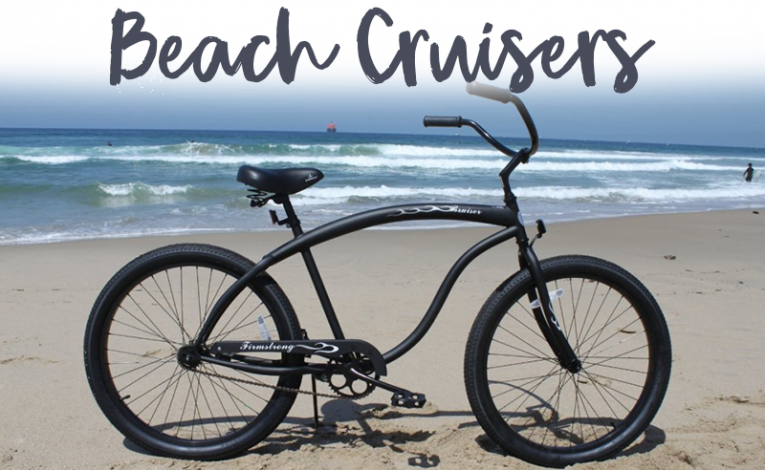
To many people, a beach cruiser is a simple, single-speed bike with a curvy frame, large tires, and fat seat to relax on.
While that may be true, there’s more to a beach cruiser than meets the eye.


To many people, a beach cruiser is a simple, single-speed bike with a curvy frame, large tires, and fat seat to relax on.
While that may be true, there’s more to a beach cruiser than meets the eye.
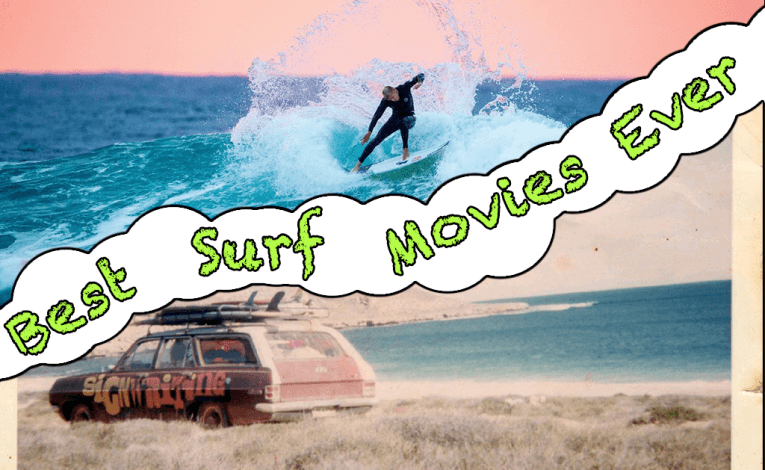
Get the popcorn, gather your surfing tribe of friends, and pull out that favorite surf movie. I watch surf movies not only for entertainment, but also to learn about an activity I love to do. Surf movies take me to exotic places, they show me the extremes of what is possible with a board on a wave, and they let my mind surf even when my body cannot.
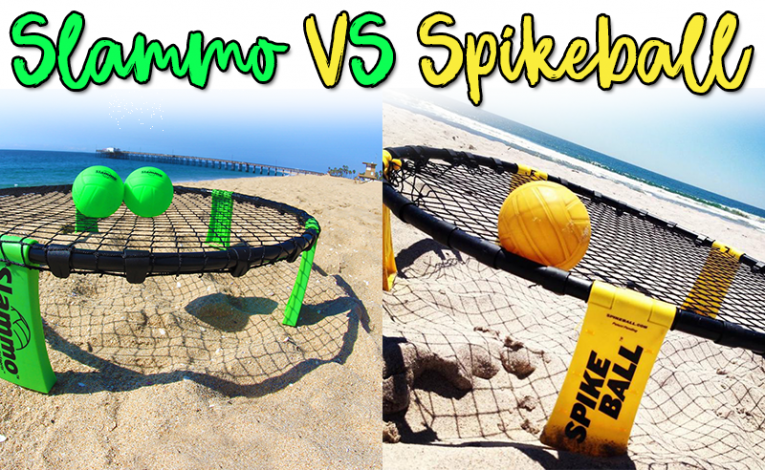
Because these two outdoor beach games are so incredibly similar, we’ve decided to do a Slammo Vs. Spikeball review so that you can better decide which one you want to purchase!
With summertime in the midst, we want to make sure you are prepared with a solid outdoor game for you and the whole family!
Check out our thorough comparison of these two games below.
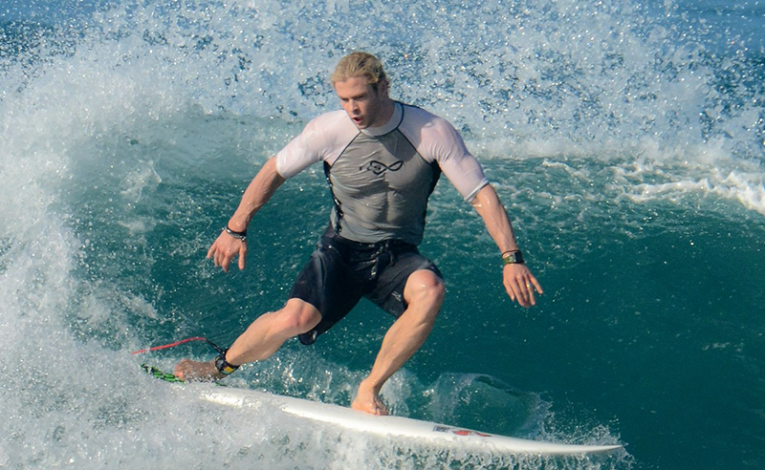
For many people, it’s pretty safe to say that surfing is one of the best activities out there. What many don’t realize is that surfing has a wide variety of health benefits.
Not only does it help our bodies to stay in shape, it also helps our minds.
In this article, we’re going to discuss all of the health benefits of surfing in hopes to get you out in the water more, as well as to feel better about spending your time surfing in general.
Without further ado, here are our top 13 health benefits of surfing in no particular order.
If you or anyone you know is struggling with a mental affliction such as autism, PTSD, depression, etc., surfing can be a great way to combat that. Of course it isn’t a completely substitute for medication or therapy, though can have amazing supplemental effects. Gary Katz, a licensed social worker from Manhattan, is a major proponent of surf therapy. He says that the physical exercise and sensory experience you get from surfing is a great way to disconnect, better your mood, or just have fun, all ways to help your step away from your mental troubles.
We all know that surfing can help you to develop a stronger core, though did you know that having a strong core can actually have secondary effects in combatting diabetes? This is because having extra weight in your core area is actually one of the biggest causes of type 2 diabetes. Paddling, balancing, swimming, etc., are all great ways to strengthen your core and keep your weight down. You can also try stand up paddling if you want to take it even further.
Stress is something that all modern people seem to deal with. This is because it’s so easy for us to constantly be working or connected to our phones. Surfing is nostalgic in a way, as it helps us to have fun without the need to be connected to anything else but the ocean. In turn, it can help us to relieve tons of stress. Try to go for a 30-minute surf session after a long day of work. We promise that you’ll feel a million times better after getting out of the water.
Sitting in the sun is hands down the best way to get your intake of Vitamin D for the day. While it’s possible to take supplements and eat certain Vitamin D rich foods, you’re much better off getting it from the sun. Vitamin D has many helpful qualities, one being that it promotes bone growth, as well as cell renewal. Now please don’t go and bake in the sun, as that will just inhibit any sort of growth and cause you to burn, but taking the sun in moderation will do you just fine. You can actually get your daily dose of Vitamin D with only 10-15 minutes in the sun.
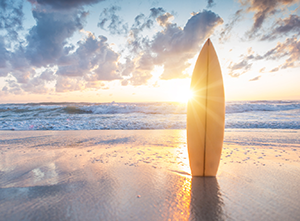
Most of us spend our days hunched over a desk at work without ever noticing that our posture has slowly diminished over the past couple of years. We’re not spending enough time keeping our spines and the muscles in our back in great condition. Surfing can help with that, as it’s probably one of the best back exercises out there. From paddling around the ocean waves, to popping up on your board, to just carrying your gear down to the ocean, you will have a big, strong back in no time.
Exercise is one of the best things to help fight insomnia or general sleeplessness. There’s no doubt you’ve heard that before, as it is a common truth. That being said, surfing is excellent exercise, meaning that it can help you sleep better too! If you notice that you’re having trouble sleeping at night, try and surf before you stay in for the evening. Don’t surf in the evening though, as the added adrenaline can actually make you feel more awake as you lie in bed.
Cardiovascular diseases are some of the top reasons people die in the US. While it is necessary to have a great diet to combat these sorts of diseases, it is also necessary to get enough cardio in your daily exercise routine. Surfing is easily one of the best forms of cardio out there, as it involves a lot of paddling, swimming, and core balance. Besides waiting in the lineup, you’re constantly pushing through some of Mother Nature’s strongest elements. If you suffer from any sort of cardiovascular disease, or just need a new form of cardio in your exercise routine, we recommend taking up surfing.
Improving your balance can be very important, especially as you move into old age. This is something that many people don’t think about because they don’t realize how it can carry over into other aspects of their lives. If you’re into any other sports, be it snowboarding, skating, gymnastics, hockey, etc., this can work as compound exercise to better your balance in those sports. To actually surf, it is important to first be able to balance on your board when you hit a wave. A number of factors, mental and physical, go into having great balance. Surfing is a way to amplify those factors.
Surfing can help to great increase your flexibility. Having great flexibility is amazing for a number of reasons. For starters, it can help to reduce the risk of injury whether you are surfing, playing sports, or just living your daily life. Secondly, being able to move your muscles in their full range of motion can help you to get more blood and oxygen to them, allowing you to not only perform better, but relax better at the end of the day.
Whoever says surfing is easy has probably never surfed. Becoming a great surfer takes a ton of time, commitment, and mental strength, in order to overcome obstacles and persevere. Those who have seen themselves become better surfers over time will tell you that it is a very rewarding and motivating experience. Not only does it prove to you that you can overcome physical obstacles in your life, but also overcome possible fears to reach things that, at one point, may have seemed far out of reach.
You don’t have to believe in God or be religious to feel spiritual. Getting on a surfboard and paddling out into the deep blue can help you have moments of perspective, realization, calmness, oneness, openness, and so on, all which deal with our spirituality. Being surrounded by the expanse of the ocean and peering off into the horizon helps us to appreciate the beauty of Mother Nature more than anything else. It can help us to disconnect from the struggles of modern society and feel at peace with the things happening in our lives. There is a reason why people often meditate or do yoga at the beach. In a way, surfing is a form of meditation.
The surfing community is one of the strongest communities out there. People from all walks of life can come together in a lineup to enjoy the beauty and excitement of the waves. It can help you to meet new people and make friends, in turn getting rid of stress and helping you to feel a sense of belonging. You may have heard that surfers are very territorial, which is true for some people, though most surfers we’ve met are actually some of the most down to earth people around.
Lastly, surfing is fun! That’s why most of us surf to begin with. The excitement of catching a wave, busting out a new maneuver, or just gearing up for a day in the salt and sun with good friends, is unparalleled.
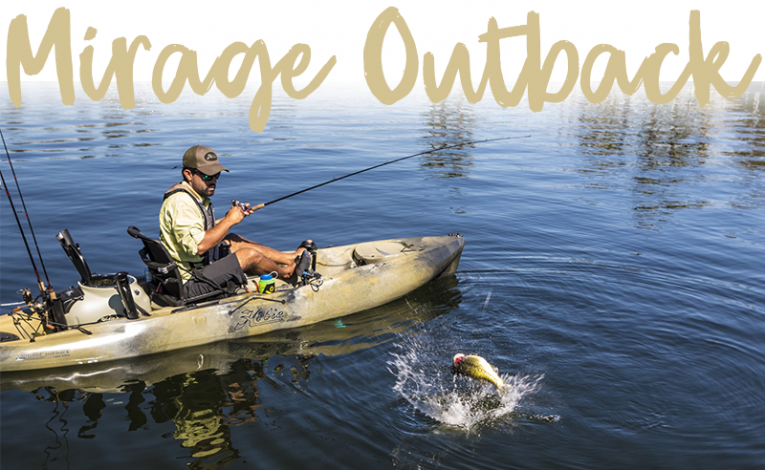
Kayaking is easily one of the most popular watersports in the world right now and if you’d like to join in the fun, we’d highly recommend sticking around for our Hobie Mirage Outback review.
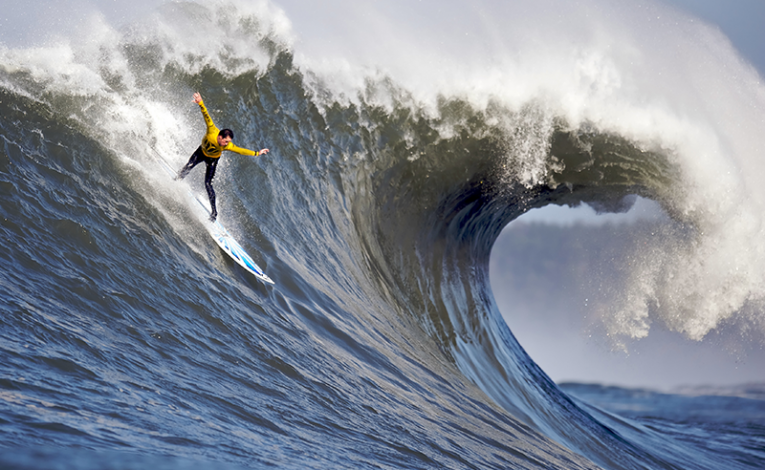
By no mean do you have to be a surfer to appreciate the beauty of a great wave.
Most beach lovers could spend hours sitting on the sand watching the hypnotic push and pull of the ocean tides.
This may be you, though have you ever pondered the thought, “How are Waves Formed?”
Many of us haven’t, but knowledge is beauty, and can enhance your wave watching experience tenfold.
Simply put, waves are formed because of the wind.
Without it, surfers would never be able to catch a wave again.
But how does the wind create an ocean so sleepless?
Does the wind know that it creates incredible waves for us surfers to enjoy?
Let’s break it down and see how these natural beauties come to be, day in and day out.
To simplify it beyond believe, waves are just energy. Waves aren’t actually water by any means, but the things that pass through the water instead. Essentially, waves are energy transmission that is caused by the wind. The wind is not alone in their creation though, as other natural factors such as earthquakes, volcanoes, and arctic ice caps melting, can have a substantial impact. The energy from these natural forces is transmitted across the water because the ocean’s surface is unobstructed. There’s really nothing to stop a wave until it reaches the shoreline.
So there are actually many types of waves in the ocean. The waves that we most commonly see are known as wind-driven waves, or waves that are the result of wind blowing over the water’s surface. Sometimes people refer to these as friction waves, as the physics of the wind is creating friction with the water beneath. Wave crests are created as wind blows towards the direction of the shoreline.
Wind doesn’t start right at the shoreline. It actually starts many miles out at sea in much calmer waters. The wind creates tiny ripples that eventually evolve into large waves as they reach the coast. A swell is actually an assembly of waves produced by wind. These winds that are hundreds of miles off the coast create the best waves we know.
There are a few factors that go into how big those swells will be though:
So now that you have a basic understanding of swells, you must know that there are two types of swells: Groundswells and Windswells.
The type of swell is judged by the time of a wave. If the period of a wave lasts longer than 13 seconds, we know that they are being created by strong winds blowing far offshore. More energy is being transferred through the water and the fetch is larger as well. These are the types of waves that give surfers long rides into shore.
Windswells, on the other hand, are wave periods under 10 seconds. These are created by winds that are close to shore. These waves aren’t nearly as consistent and are much weaker than those created by groundswells.
This brings us to pressure systems. When less air particles are present, low-pressure systems are produced. When that air is cooled and a high air particle region decreases, high-pressure systems are produced.
Low-pressure systems are the best for creating stronger waves. An equalizing motion occurs, as there aren’t as many air particles to obstruct, and better wind is generated. In a deep, low-pressure system, wind power is much faster, therefore created more waves in a system where friction is pretty tight.
High-pressure systems create the opposite effect, creating strong air motion in high-altitude regions. Obviously high-altitude winds aren’t as effective in the creation of waves, so we won’t focus on those as much.
You’re right, they are very chaotic. Wind waves, in what we call “wind zones”, are completely out of order until they eventually move outside of the wind zone. Eventually, the larger and faster waves begin to overtake the smaller and slower once. This creates less waves overall, but a lower number of more powerful and unified waves.
At some point, waves are forced to organize into wave-sets. Wave-sets are defined as several waves that follow in line behind each other. The number of waves can be anywhere from a few to over 20. The time between those waves is known as the “wave period”. This whole process of organization can easily take a number of days to happen.
The longer that period of time, the cleaner and more organized those wave sets will become. If there is a wind zone that these waves hit after they’ve already emigrated from their original wind zone, they will lose energy.
Once a wave finally reaches shore, that wave can easily be manipulated by a sand bank. This is why we can never be 100% sure that the waves will be quality, even with everything mentioned above. Sand banks are ridges that are placed along the ocean floor. They rise up close to the water’s surface and help to create the peaks that surfers know and love so well.
If you’ve ever seen a new wave crest at your local spot, it’s most likely because there is a new sand bank under it. The waves pump up atop the sand crests and creates waves that can be surfed. It’s not always sand banks though, as things like jetties or artificial reefs can easily affect the wave shape.
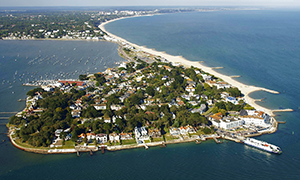
There’s a common misconception that tides and waves are the same. Tides are actually a name for the collective of slow-moving waves that regularly rise and fall on the sea’s surface. These tides are not caused by wind, but by the gravitational pull of the moon and sun. Gravity is the thing that holds water in place. The gravity that the moon creates helps to pull the ocean water so that it sways and moves.
As the sun rises in the east and the moon and stars come out, waters will typically rise and fall. The moon pulling the water is known as high tide. While the moon is close to your local break, pulling the tides up, you can assume that wherever the moon is furthest from has lower tides.
There are three main factors that produce great waves for surfing
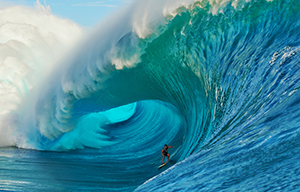
The largest wave on Earth is arguable Jaws or Pe’ahi, and is located in Maui.
This wave can easily reach anywhere from 60-70 feet.
It was once a popular spot for windsurfers, though became a popular tow-in spot for surfing a few decades ago.
The ocean water that is tossed up on the beach will eventually flow back out into the deep. There is no method to this flow though, and the water will naturally move back out through whatever route is easiest. This can be through a jetty or a strange break in a sandbar.
Essentially, that water will funnel through a narrow stream on the ocean floor, creating a pull in the opposite direction. These rip currents are usually darker than the surrounding water and easier to spot.
There are four main types of beach breaks that create different waves:
Beach Breaks are where waves break over the sand and are the most commonly known.
Reef Breaks are where waves break over a rock bottom.
Point Breaks are where the waves hit a stretch of land at an angle and break semi-parallel to the shoreline rather than towards it.
Rivermouth waves will break as a river deposits the water at the shoreline.
This is simply the direction that the wave is breaking. It is judged from the perspective of a surfer or someone out at sea, not by someone who is standing on the beach. If a wave is breaking from left to right, and a surfer has to ride it to the right, it is a right hand break.
Weirdly enough, there are waves that peel off in both directions at the same time. These are called A-Frame Waves.
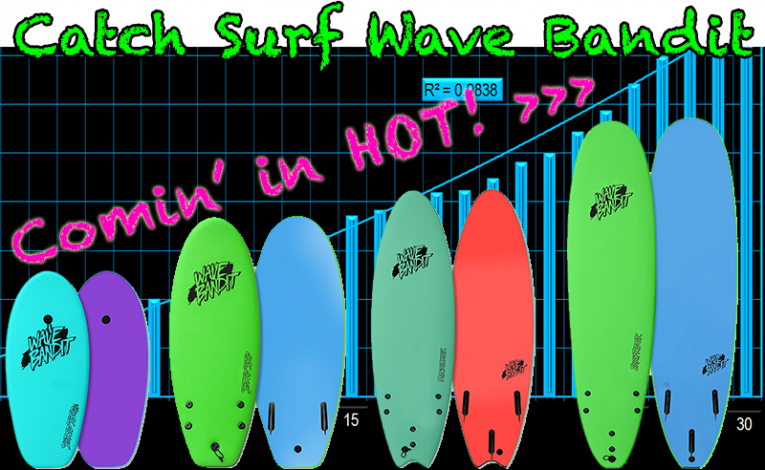
Catch Surf in San Clamente, CA, came up with the Wave Bandit Edition Models of Wake Surfers. When they designed this Edition, they had a specific type of wave rider in mind.
One small in stature, on the lightweight side, someone who already has some surfing skills but they want to progress, and they want a stylin’ stick! You may be thinking “GROM” and you’d be right! Yet, you don’t have to be a kid to surf one. You just have to fit the “type” – small and lightweight.
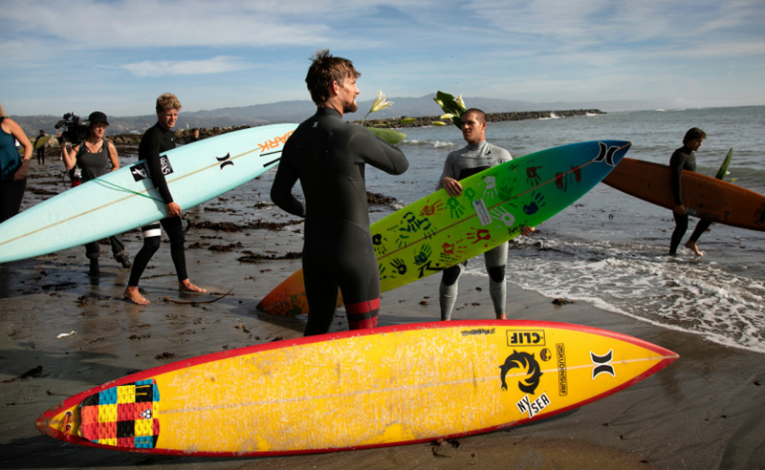
The history of the gun surfboard goes all the way back to 1949. A man named George Downing began shaping redwood boards in his garage in Hawaii.
At this point, not many people were surfing the massive breaks on the North Shore or Maui, as their boards couldn’t handle the waves.
Downing, a man who is now synonymous with the word “legend”, sought out to change the game.
He designed the Hotcurl, a thin 10’ 11” log that is now known as the grandfather of modern day gun surfboards.
It wasn’t until the 1950s that Downing began shaping guns that we now know as modern-style gun boards.
George Downing didn’t just shape guns though, he rode them fast and hard.
He successfully surfed the untouched waves of North Shore and Maui and became one of the first surfers in history to ride waves bigger than 20-feet.
The popularity of these boards arose after the 1954 Makaha International Surfing Championship, where George took how the champion title riding his gun. He also took his gun to Peru and won a few championships there, showing off his skills and new board. Basically, he was gunning through the 1950s and 60s, winning tons of competitions, appearing in legendary surf movies like The Endless Summer, and teaching modern day shapers his ways.
In terms of their size, they can range from 6’6” all the way to 10’. They are made with extra thickness in comparison to shortboards, which gives riders more stability on larger waves. To the untrained eye, some might mistake them for longboards, though there are a few smaller features that give them away. For one, gun surfboards are narrow in the nose and tail. This gives them the ability to cut deep into the faces of waves using their rails.
Some may refer to the smaller boards as semi-guns, as they share the same characteristics of their larger older brothers, though they don’t have the size. The curves on them are pretty free-flowing, giving riders the ability to transition smooth. Even with the small size, they are definitely built to ride monster waves as well.
Gun surfboards caught on because they were the only boards that allowed surfers to ride waves once they reached a certain size. Prior to Downing, it was impossible to hit waves over 20’ high. Longboards were too wide at the noses and tails to get enough contact with waves and shortboards were too wobbly to get the proper stability to survive a steep drop.
In a way, gun surfboards were like shortboards. They were created to bust through the ceiling that limited surfers for many years. Unlike shortboards, which were designed to change the trick and maneuver possibilities, gun surfboards were made to conquer the beasts of Mother Nature.
You should only add a gun to your quiver if you’re brave enough to take on the biggest waves out there Nobody under an expert surfer should realistically have a gun in their quiver. You also have to be an expert paddler. At some point, you’ll be paddling into waves going 30MPH. If you are brave and willing though, a gun will be your one-way ticket to a feeling like no other. Need we say anything else?
The gun surfboard is synonymous with big wave culture. Thanks to George Downing, men and women surfers everywhere are now able to go where surfers in the past were never able to go before. You can really never prepare yourself for coming in contact with a wave that is 10x taller than you. You truly just have to take that drop and hope for the best. For the expert surfers out there, we hope that you can now surf your guns with a bit more context and respect for where they came from. Good luck!
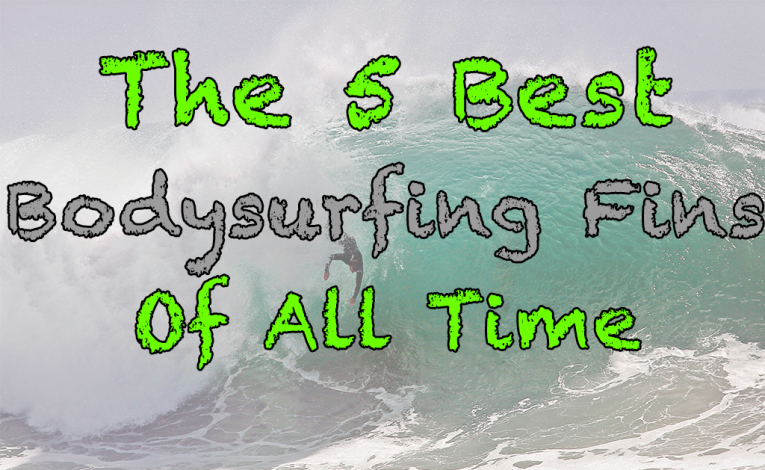
Some say that there is no purer way to surf than bodysurfing. With no board in between your body and the face of the wave, you are surfing on unadulterated bliss. It can’t get any more exhilarating than watching Mark Cunningham or Kelly Slater bodysurfing in double overhead conditions at Pipeline. Seeing their agile bodies drop through giant cascading waves will make you wonder: how exactly do they do it?
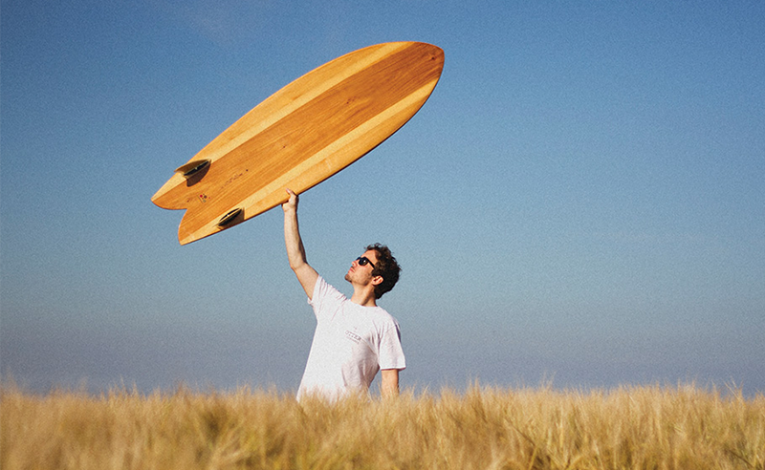
The Fish surfboard was born in 1967 in a small Southern California town called Point Loma.
Steve Lis, now one of surfing’s most famous designers, shaped the fist fish after finding a longboard that was snapped in half.
It was made so that he could kneeboard around the large, hollow reef breaks that were sprinkled around San Diego County.
Eventually, after testing it himself, Steve gave a few to his kneeboarding friends to test out as well.
At this point, the Fish was still very much underground.
The first person to actually use it as a standing surfboard was Jeff Ching, a surfing buddy of Steve’s.
With Steve’s 4’7” board, Ching paddled out and carved the first ever standing fish wave in history.
After borrowing his board, Ching asked Steve to make him a board that was a bit larger and more versatile.
Therein came Ching’s famous photograph of the first 5’5” fish ride. Like all good things though, the design of the Fish found its way into the hands of the world.
In 1972, the World Championship was being held in San Diego. Two locals, Jim Blears and David Nuuhiwa, ended up taking their fishes out into the waist-high surf that day and totally wiped the competition. It was at that moment that the fish had gone viral. Essentially, people were so baffled as to what these boards allowed Blears and Nuuhiwa to do in conditions that were pretty subpar.
After the championship was over, new fish shapers took the design to the drawing board to begin highlighting certain characteristics so that it could truly excel in small wave conditions. Because of this, the fish was no longer for head high waves, and the design that we know and love today became cemented in history.
Fish boards look a lot like shortboards, but have small nuances that actually make them quite different. For starters, fish surfboards have much more volume than shortboards, making them more buoyant and easier to paddle on in smaller surf. They’re also much wider that shortboards as well, mostly to make up for the face that they are short and stubby.
The reason why they call at the fish? Well, just look at the profile. It’s like surfing a big goldfish cracker. The swallowtail mimics that of a little fishy and the flat rocker almost makes it look like you could have the two fish eyes on either side.
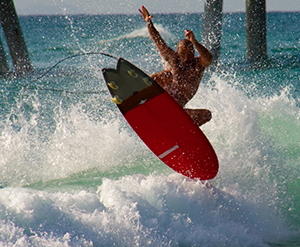
The fish surfboard caught on mostly because it was easy to surf in smaller conditions. Mush, slop, chop, whatever, a fish could take it on. Obviously surfer could have taken longboards out, but then they were sacrificing speed. While the fish worked for many surfers, it still had limitations. The true spread of the fish began as shapers started tweaking the design to make it more adaptive for outlier surfers. One example is Mark Richards, a 6’1” competitive surfer who was around in the 1970s.
The boards were too short, the tails weren’t narrow enough to provide enough maneuverability, and the single fin design wasn’t versatile enough. He was able to popularize boards that took these traits and flipped them, giving the fish a new face that would live on.
Beyond catching small waves, modern fish surfboards are very versatile. Because they have much more volume than a regular shortboard, they’re much easier to paddle and pop up on. The ease in paddling also has to do with the fact that the rocker is so flat.
Unlike a longboard, it is very possible to use the fish for tricks and maneuvers in smaller conditions as well. Most people believe that the fish is just meant to gain speed in small waves, though it definitely holds the key for much more. While not as maneuverable as a shortboard, you really can’t get anything better to perform on mushy days.
Fish surfboards nowadays seem to be a lot more diluted than they maybe were intended to be originally. Some fish retain the small length and profile while other use the profile but extend the length to make it better for bigger waves. Fishes are being shaped for specific needs and being tuned to the point that they are pretty much hybrids of different boards.
With all that said, the fish is a classic, and easily one of the coolest boards around. Anyone who tells you they are kooky has never ridden one. We expect that they’ll one day become unrecognizable through evolution, so do yourself a favor and ride one now!